Evidence atlas
Technical Evidence Atlas
A figure-based technical atlas that turns the report material into concise evidence cards: image, interpretation, source, document reference and direct links into the deep-zoom viewer or comparison lab.
- Evidence points
- 12
- Categories
- 5
- Basis
- Technical report
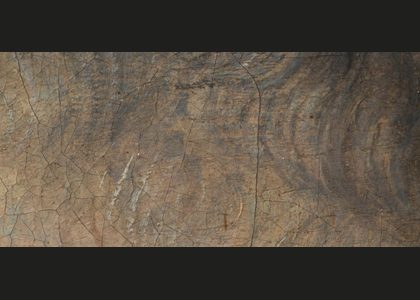
Head and modelling
The head detail is a primary visual control point for modelling, tonal transitions and workshop handling.
- Source
- KIK-IRPA Technical and art historical study and conservation report
- Document
- Technical report
- Page / figure
- fig. 32
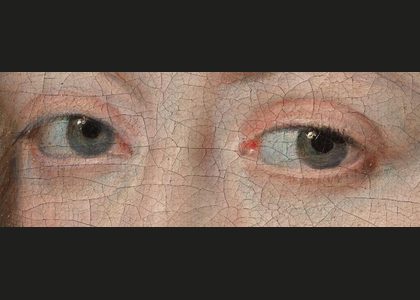
Eyes: private version detail
Eye details are useful for comparing execution quality, gaze construction and local corrections between the Vienna and Prado versions.
- Source
- KIK-IRPA report; comparative figures
- Document
- Technical report / comparison set
- Page / figure
- fig. 62
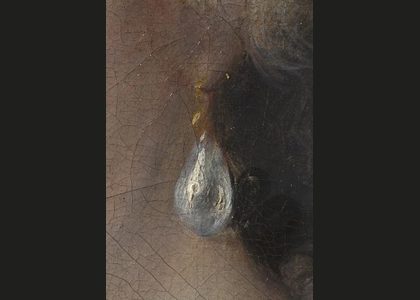
Pearl earring
The earring detail belongs to the group of jewellery comparison points relevant to variant handling and local finish.
- Source
- KIK-IRPA report; comparative figures
- Document
- Technical report / comparison set
- Page / figure
- fig. 73
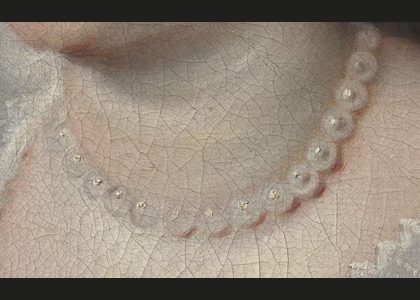
Pearl necklace repositioning
Reported change in the necklace position is an important pentimento-type observation, supporting a creative variant model rather than a purely mechanical copy.
- Source
- KIK-IRPA report; Chrościcki / Krzyżagórska-Pisarek summary
- Document
- Technical report
- Page / figure
- figs. 26a-c; summary p. 21
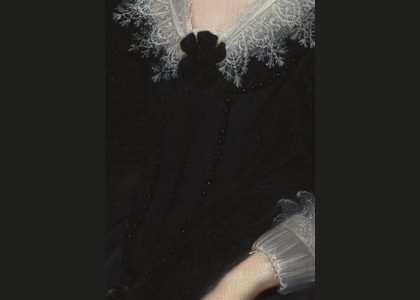
Dress and lace
The lace and dress details allow close comparison of ornamental handling, rhythm and degree of finish.
- Source
- KIK-IRPA report; comparative figures
- Document
- Technical report / comparison set
- Page / figure
- fig. 68
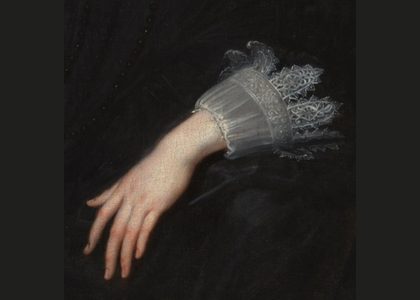
Hand detail
The hand is a key comparison zone because small changes in fingers and contour are discussed in technical and infrared evidence.
- Source
- KIK-IRPA report
- Document
- Technical report
- Page / figure
- figs. 22a-c, 24a-b, 65
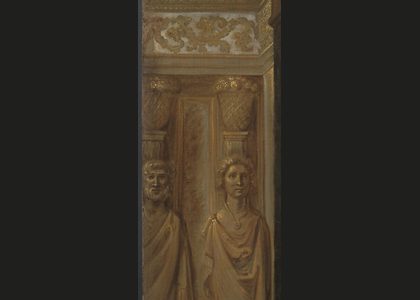
Architectural background
Background and caryatid details are relevant to workshop division, finish hierarchy and comparison with related architectural settings.
- Source
- KIK-IRPA report; conference architectural setting segment
- Document
- Technical report / conference record
- Page / figure
- figs. 29, 75-76; timeline 56:47
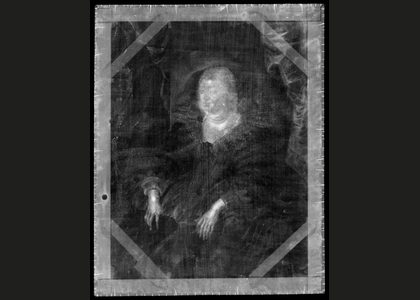
Stretcher visible in X-radiograph
The stretcher is later than the seventeenth century, so the atlas separates support history from evidence belonging to the original painting structure.
- Source
- KIK-IRPA report
- Document
- Technical report
- Page / figure
- pp. 7-11; figs. 1-4
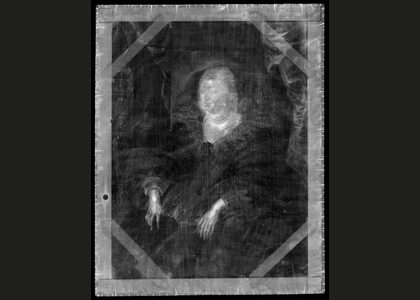
X-radiograph: private version
The X-radiograph is central for structural reading, changes below the surface and comparison with the Prado technical image set.
- Source
- KIK-IRPA report; comparative figures
- Document
- Technical report
- Page / figure
- fig. 56

Infrared evidence
Infrared imagery is used for reading underdrawing-like evidence, contour corrections and local changes in hand and costume details.
- Source
- KIK-IRPA report
- Document
- Technical report
- Page / figure
- figs. 21, 24, 39, 78
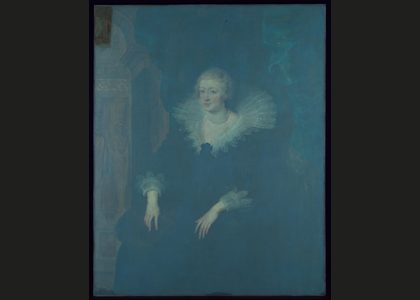
UV fluorescence
UV images clarify restoration, retouching, cleaning tests and surface condition, which prevents conservation history from being confused with original handling.
- Source
- KIK-IRPA report
- Document
- Technical report
- Page / figure
- figs. 37, 90, 93, 97, 102
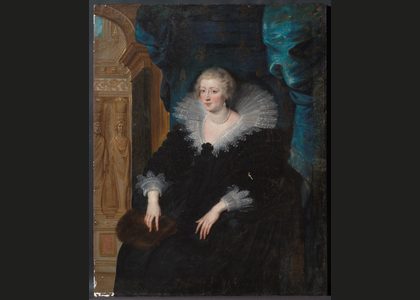
Condition after treatment
Before/after treatment images anchor the technical evidence in conservation reality and document what belongs to later intervention.
- Source
- KIK-IRPA conservation documentation
- Document
- Technical report
- Page / figure
- figs. 101-111